USING FF-EPS INSULATION AS THERMAL INSULATION FOR EXTERIOR WALLS
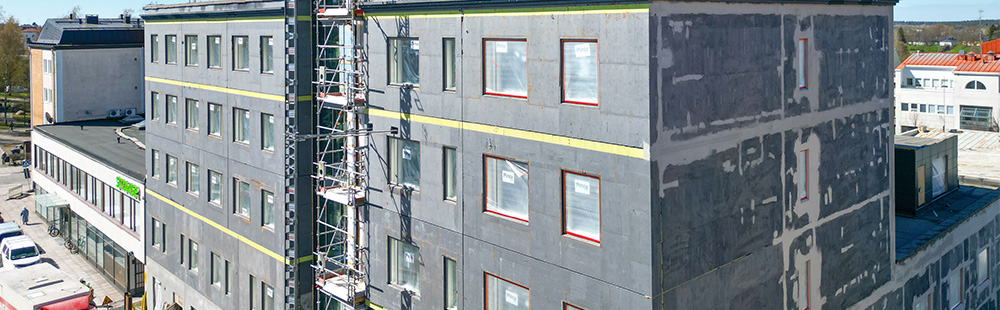
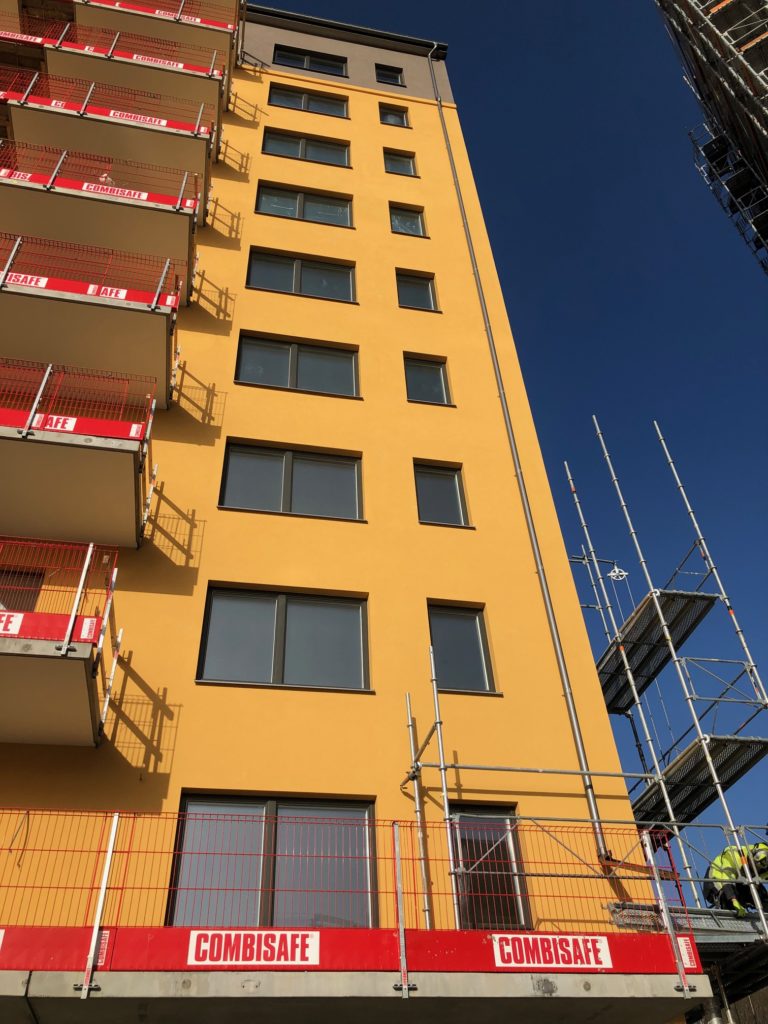
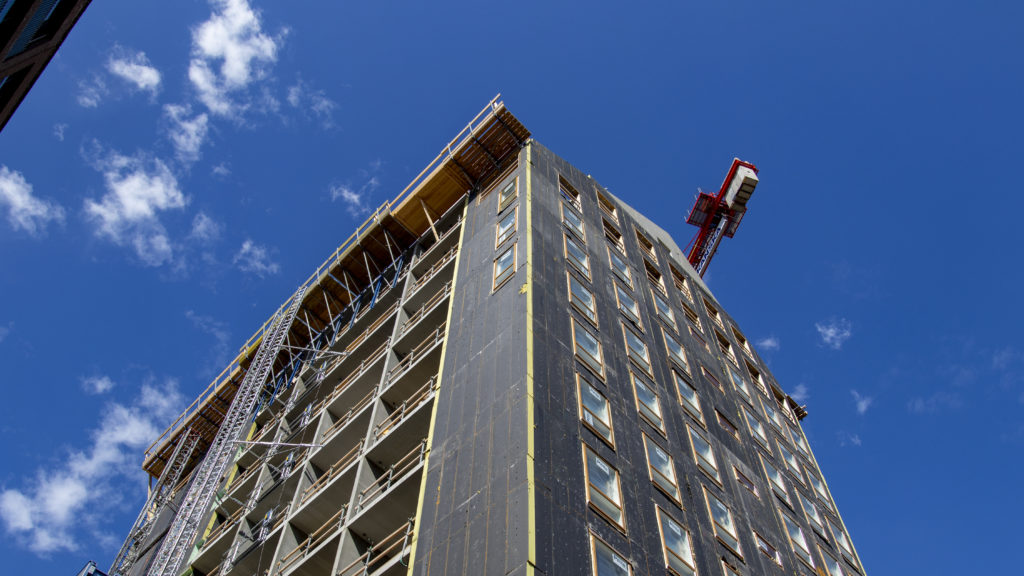
For a thin-coat rendered P1 fire class apartment building with a height of less than 28 meters, fire stops are created on every other floor 200 mm of FF-PIR insulation.
FF-EPS 60 S is a cost-effective thermal insulation product for walls that offers safe moisture performance and has a declared thermal conductivity (λD) of 0.031 W/mK. FF-EPS insulation products are suitable for new construction, low-energy, passive, and zero-energy construction, as well as for supplementary thermal insulation of older buildings.
FF-EPS 60 S insulation products can be used with various framework materials. Frames can consist of wood, steel, concrete, precast concrete, brick, lightweight concrete (Siporex), or breeze blocks. Structures that are thermally insulated with FF-EPS usually require a separate air or vapor barrier layer as the product does not have a high enough water vapor resistance to function as vapor barrier on its own. We recommend using elastic PU foam sealant for the seams and joints between panels.
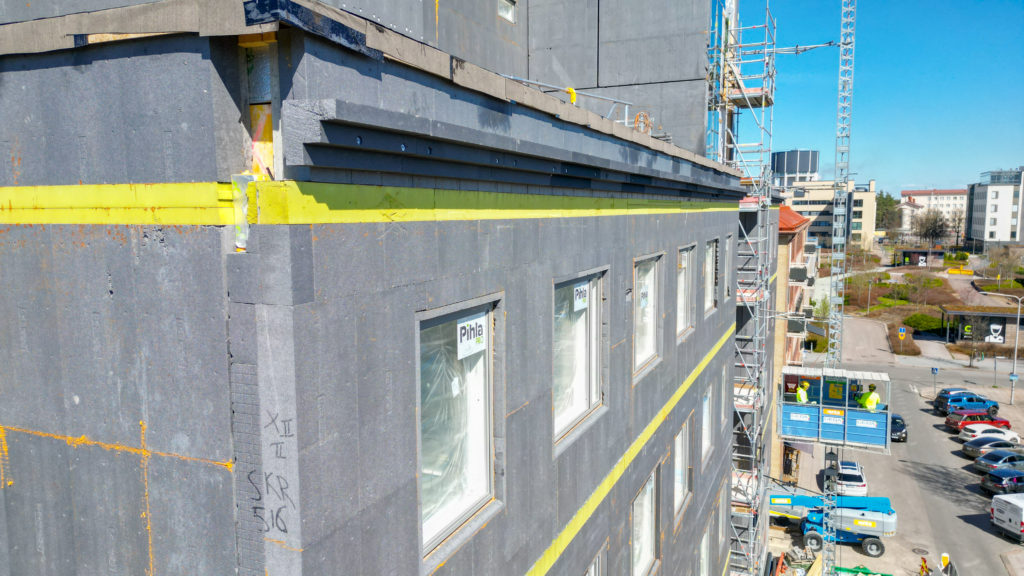
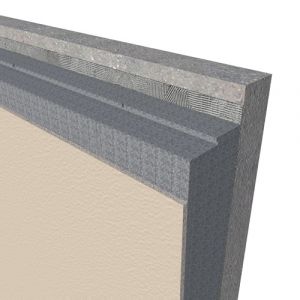
Custom-designed cornices to support the architectural design of the eaves of the building.
FF-EPS INSULATION PRODUCTS ARE SUITABLE FOR ALL WALL STRUCTURES
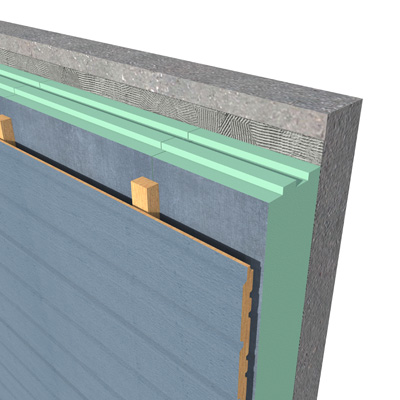
As a framework material for an exterior wall, rock (concrete, brick, breeze block) provides an excellent base for FF-EPS. The exterior surface of FF-EPS 60 S panels can be clad with wood facing, or thin-coat render may be applied directly onto the surface of an aged FF-EPS ETICS panel. FF-EPS insulation panels with locking tongue and groove are installed on the outside of the framework as a continuous layer of insulation by, for example, bonding the panels with mortar or attaching them with a PU foam adhesive to a supporting wall and securing the attachment with a few mechanical anchors. A concrete wall that is thermally insulated with FF-EPS insulation does not require an additional vapor barrier. The thickness of insulation is determined according to the desired U value. For example, a U value of 0.17 can be achieved with a 180 mm of FF-EPS insulation. To approach true zero-energy levels, walls should have a U value of at least 0.12, in which case the required insulation thickness is 250 mm.
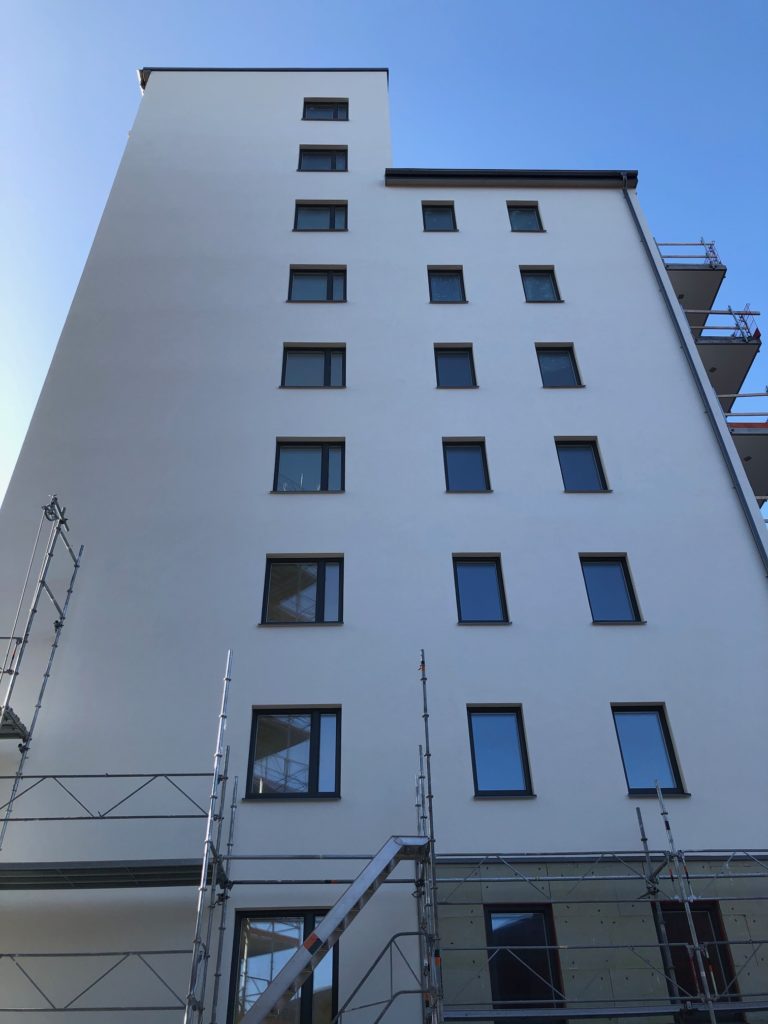
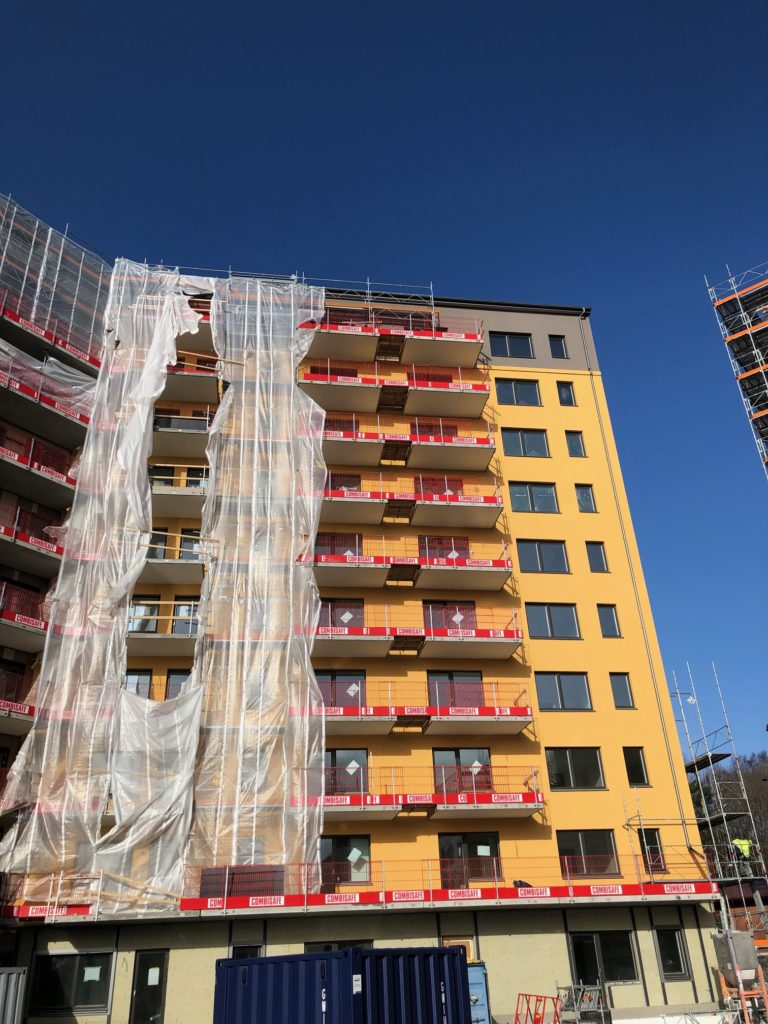
FF-EPS ETICS thin-coat render as base.
The framework of the exterior wall may also consist of wood, in which case the structure can be constructed as follows: FINNFOAM or FF-PIR thermal insulation panels are installed onto the interior surface of studs or between them, which also function as vapor barrier within the structure. A continuous layer of FF-EPS panels is installed on the exterior of the framework. The thermal conductivity of the layer of FF-EPS panels on the outside of a load-bearing framework must be as high or higher as that of the FINNFOAM or FF-PIR insulation in between the framework elements to insure correct moisture performance. The thickness of insulation is determined according to the desired U value. With a timber frame, the exterior face is constructed as a ventilated structure.
You can find more information on the properties of FF-EPS panels as well as the panel types and dimensions here.
THERMAL INSULATION FOR EXTERIOR WALLS USING FF-PIR POLYURETHANE INSULATION PRODUCTS
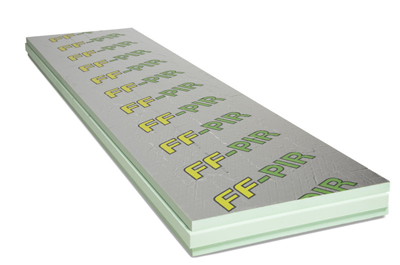
FF-PIR is one of the most effective thermal insulation materials available on the market with a declared thermal conductivity (λDeclared) of 0.022 W/mK. FF-PIR insulation products are suitable for new construction, low-energy, passive and zero-energy construction houses, and for supplementary thermal insulation of older buildings.
FF-PIR insulation can be used to create very thin and leak-proof structures. In constructing low energy, passive, or zero-energy houses, structural thicknesses will barely increase when compared to conventional houses built using traditional insulation products.
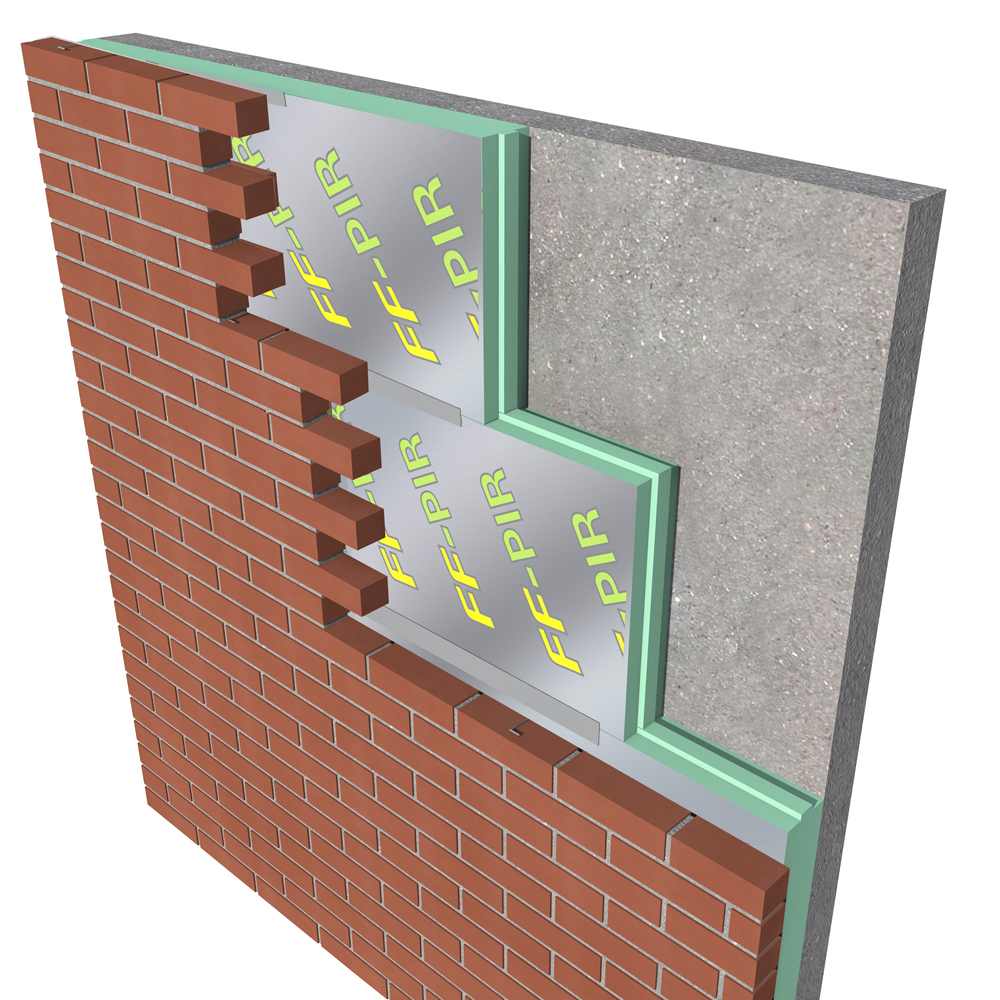
When used in the ventilated facades of P1 fire class apartment buildings, FF-PIR FR improves the safety of the structure substantially, as the flame retardant FR laminate on the surface of the panels expands to fill the ventilation gap and thus prevents fire from spreading through.Ventilated facades for P1 buildings less than 28 meters high can also be created using FF-PIR AL insulation products in accordance with separate fire performance testing.
COMBINATION OF INSULATION AND VAPOR BARRIER
Separate air or vapor barriers are also not necessary in the structures. The aluminum or plastic laminate on the surface of the FF-PIR insulation products has a very high water vapor resistance and also functions as vapor barrier within structures. For the seams and joints between the panels, we recommend using elastic foam sealant and vapor barrier or aluminum tape that is suitable for joints.
FF-PIR insulation products are excellently suited for use with different frame materials in roofs. The frames can consist of wood, steel, concrete, or lightweight concrete (Siporex).
In a zero-energy house, the frame structure can be protected from weather by installing a sufficiently thick and effective layer of thermal insulation on the outside of the framework of the building.
FF-PIR INSULATION PRODUCTS ARE SUITABLE FOR ALL FRAME STRUCTURES
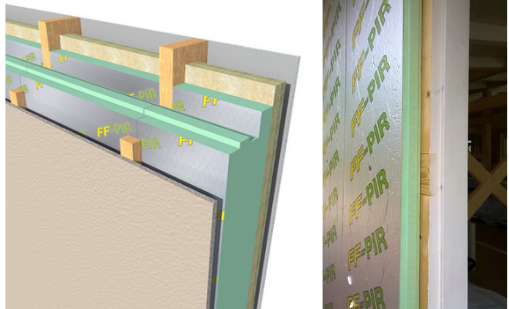
FF-PIR insulation products can be used in exterior walls with various framework materials. When the framework is made from wood, the structure can be constructed as a so-called full PIR wall, where a 100 or 150 mm FF-PIR K600 panel is installed between studs with on-center spacing of 600 mm (K600). A second continuous layer of panels is installed on the inside or outside of the structure. If the second layer is installed on the inside, its thickness may be chosen freely based on suitability for the project (30–150 mm). Where the second layer is installed on the outside of a load-bearing framework, the exterior insulation must be as thick or thicker as the FF-PIR insulation in between the framework elements to insure proper moisture performance.
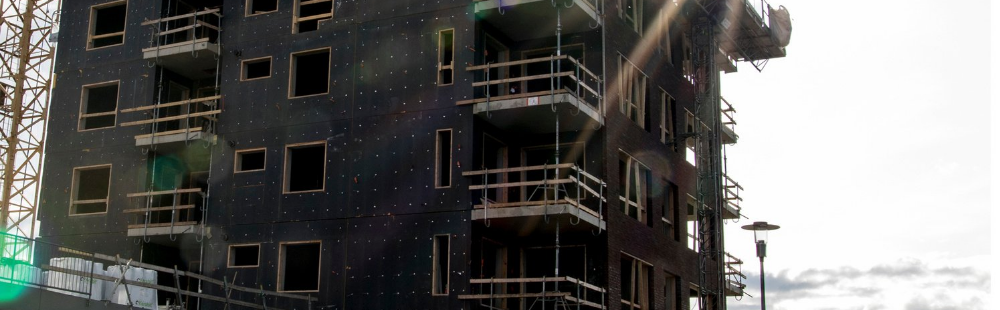
Ventilated facade FF-PIR FR.
INSULATION THICKNESS BASED ON THE U VALUE
In a so-called hybrid structure, wind-proofing is installed on the outside of the studs as regular, mineral wool insulation is fitted between the studs, and a continuous layer of FF-PIR insulation panels is installed on the inside with the seals seamed with elastic foam sealant and tape. The thickness of insulation is determined according to the desired U value. This will create an absolutely leak-proof and energy efficient structure.
The framework of the exterior wall can also consist of concrete, brick, or breeze blocks, in which case insulation panels are installed as a continuous layer on the outside of the internal framework.
You can find more information on the properties of FF-PIR panels as well as the panel types and dimensions here.
The FF-PIR PLI insulation products are used where the insulation becomes into contact with poured concrete as they are suitable for use with fresh concrete.
The below table includes a few examples of wall structures.